

Top 5 Ecommerce Strategies for Growth
In today’s fast-paced digital landscape, the global market is increasingly dominated by online transactions. The sheer volume and velocity of digital sales mean that businesses, both large and small, must constantly evolve their approach to stay competitive. Understanding and implementing effective strategies for your Ecommerce business is no longer an option, but a necessity for sustained growth and profitability.
The rise of digital storefronts has transformed how consumers shop, making convenience, personalization, and seamless experiences paramount. For any venture aiming to thrive in this dynamic environment, a robust strategy is crucial. This article will delve into five top strategies designed to propel your Ecommerce growth, helping you not just survive but flourish in the competitive online marketplace.
Optimizing Your Ecommerce Customer Experience
The customer experience (CX) is the cornerstone of any successful Ecommerce operation. In a world where choice is abundant, consumers gravitate towards brands that offer intuitive, enjoyable, and personalized interactions. A superior CX not only drives initial sales but also fosters loyalty and repeat business, which is significantly more cost-effective than acquiring new customers.
Personalization and User Journey in Ecommerce
Personalization goes beyond simply addressing a customer by name. It involves tailoring the entire shopping journey based on their past behavior, preferences, and demographics. This can include personalized product recommendations, customized email marketing campaigns, and dynamic website content that adapts to individual users. Data shows that personalized experiences can significantly boost conversion rates; for instance, a study by Epsilon found that 80% of consumers are more likely to make a purchase when brands offer personalized experiences.
Mapping out the user journey from discovery to post-purchase support is vital. Identify potential pain points and areas for improvement. Is your website easy to navigate? Is the checkout process streamlined? Are product descriptions clear and comprehensive? Each step should be designed to minimize friction and maximize satisfaction, ensuring a smooth path to purchase and beyond. Consider how factors like website load speed and mobile responsiveness contribute to the overall user experience.
Seamless Omnichannel Integration for Your Ecommerce Business
Modern consumers expect a consistent experience across all touchpoints, whether they’re browsing on a desktop, using a mobile app, or interacting with your brand on social media. An omnichannel strategy ensures that all these channels are integrated and work together seamlessly. This means a customer can start shopping on their phone, add items to a cart, and then complete the purchase later on their laptop without any hiccups.
For businesses with both online and physical stores, omnichannel integration is even more critical. Features like “buy online, pick up in-store” (BOPIS) or in-store returns for online purchases bridge the gap between digital and physical, enhancing convenience and offering customers flexibility. This unified approach strengthens brand perception and improves overall customer satisfaction, making your Ecommerce presence more robust.
Leveraging Data Analytics for Strategic Ecommerce Growth
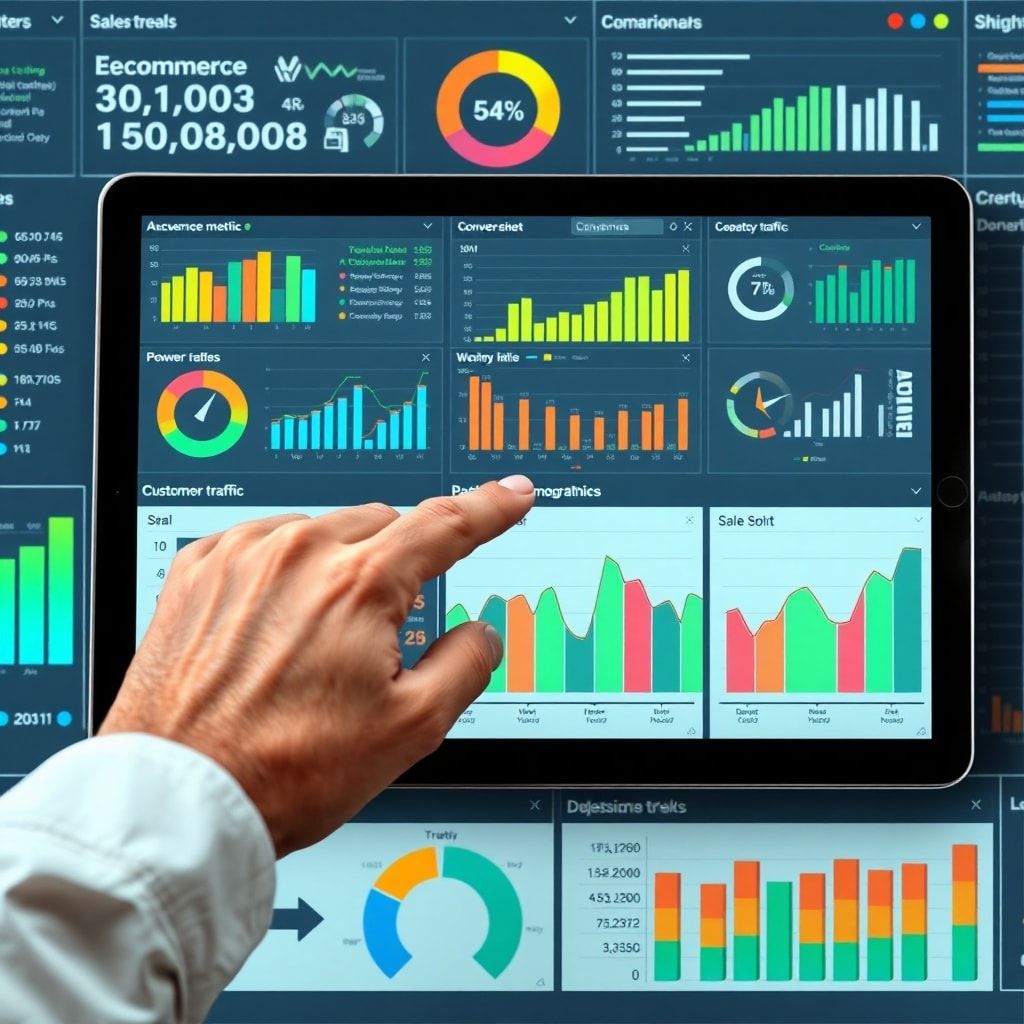
In the digital age, data is the new oil. For Ecommerce businesses, the ability to collect, analyze, and act upon data is a powerful differentiator. Strategic use of analytics can unveil invaluable insights into customer behavior, market trends, and operational efficiencies, guiding informed decision-making and optimizing resource allocation.
Understanding Customer Behavior Through Ecommerce Data
Tools like Google Analytics, Shopify Analytics, and various CRM platforms provide a wealth of data about who your customers are, how they interact with your website, and what drives their purchasing decisions. By tracking metrics such as bounce rate, time on page, conversion paths, and average order value, you can gain a deep understanding of customer behavior. This insight allows you to identify popular products, understand where customers drop off in the sales funnel, and pinpoint areas for website optimization.
Analyzing customer demographics, geographic locations, and purchasing history helps in segmenting your audience. This segmentation is crucial for creating highly targeted marketing campaigns that resonate with specific groups, leading to higher engagement and conversion rates. For example, if data reveals a significant portion of your customers are repeat buyers, you might focus on loyalty programs and exclusive offers to reward their continued patronage.
Optimizing Marketing Campaigns with Ecommerce Insights
Data analytics empowers you to refine your marketing efforts, ensuring that every dollar spent yields the best possible return. By tracking the performance of different marketing channels—such as social media, email, SEO, and paid ads—you can determine which ones are most effective in driving traffic and conversions for your Ecommerce site. This allows for more strategic budget allocation and campaign adjustments.
A/B testing, a powerful technique facilitated by data, allows you to experiment with different versions of web pages, ad copy, or email subject lines to see which performs better. For example, you might test two different product page layouts to see which one leads to a higher add-to-cart rate. Regularly reviewing key performance indicators (KPIs) and adjusting your strategies based on real-time data ensures that your Ecommerce marketing remains agile and highly effective.
Embracing Mobile-First Ecommerce Strategies
With smartphones now ubiquitous, a mobile-first approach is no longer optional but essential for any successful Ecommerce business. A significant portion of online shopping occurs on mobile devices, and Google’s mobile-first indexing means that your site’s mobile experience directly impacts its search engine ranking. Neglecting mobile optimization can severely limit your reach and alienate a vast segment of potential customers.
Responsive Design and Mobile User Experience in Ecommerce
Responsive web design is paramount. This ensures your website automatically adjusts its layout and content to fit any screen size, from large desktop monitors to small smartphone screens. A truly responsive design guarantees that images load correctly, text is readable without zooming, and buttons are easily tappable on a mobile device. A clunky mobile experience can lead to high bounce rates and lost sales, as users quickly abandon sites that are difficult to navigate on their phones.
Beyond responsiveness, consider the overall mobile user experience. This includes optimizing for touch interactions, simplifying navigation menus, and ensuring fast loading times. Mobile users often have shorter attention spans and are looking for quick, efficient ways to complete their tasks. Streamlining the checkout process, offering mobile payment options like Apple Pay or Google Pay, and reducing the number of steps required to make a purchase are critical for enhancing the mobile Ecommerce journey.
Mobile Apps and Progressive Web Apps (PWAs) for Ecommerce
For larger Ecommerce businesses or those with a loyal customer base, investing in a dedicated mobile app can provide an even more personalized and engaging experience. Apps offer features like push notifications, offline access, and faster loading speeds, which can significantly boost customer retention and repeat purchases. They also provide a direct channel for communication and exclusive offers, fostering a stronger connection with your brand.
However, developing a native app can be costly and time-consuming. Progressive Web Apps (PWAs) offer a compelling alternative, combining the best features of web and mobile apps. PWAs are web applications that look and feel like native apps, offering fast loading times, offline capabilities, and the ability to be added to a user’s home screen without requiring an app store download. This hybrid approach can deliver an enhanced mobile experience without the full development overhead of a native app, making it an attractive option for many Ecommerce players.
Diversifying Marketing Channels for Maximum Ecommerce Reach
Relying on a single marketing channel is a risky strategy in the ever-changing digital landscape. A diversified approach ensures that your brand reaches a wider audience, mitigates risks associated with algorithm changes on any one platform, and builds a more resilient marketing ecosystem for your Ecommerce business.
Exploring Social Commerce and Influencer Marketing for Ecommerce
Social media platforms have evolved far beyond simple networking sites; they are now powerful sales channels. Social commerce allows customers to discover, browse, and purchase products directly within platforms like Instagram, Facebook, and TikTok. Integrating your product catalog with these platforms and enabling direct shopping features can significantly reduce friction in the buying process. For instance, brands leveraging Instagram Shopping have seen considerable success in converting social engagement into sales.
Influencer marketing is another potent tool within the social sphere. Collaborating with influencers whose audience aligns with your target market can introduce your products to a highly engaged and receptive demographic. Authentic endorsements from trusted voices often carry more weight than traditional advertising, driving both brand awareness and direct sales for your Ecommerce offerings. Research by Statista indicates that the global influencer marketing market size is projected to reach over $21 billion by 2023, highlighting its growing importance.
Content Marketing and SEO for Sustainable Ecommerce Traffic
While paid advertising can deliver immediate results, content marketing and search engine optimization (SEO) build sustainable, organic traffic over the long term. Creating valuable, relevant, and consistent content—such as blog posts, guides, videos, and infographics—establishes your brand as an authority in your niche. This content attracts potential customers who are actively searching for information related to your products or services, drawing them naturally to your Ecommerce site.
SEO involves optimizing your website and content to rank higher in search engine results pages (SERPs). This includes using relevant keywords, optimizing meta descriptions, ensuring fast site speed, and building high-quality backlinks. A strong SEO strategy means that when someone searches for a product or solution you offer, your Ecommerce business is more likely to appear at the top of their results, driving free, qualified traffic to your store. For further reading on digital marketing strategies, explore resources on digital marketing best practices.
Implementing Sustainable and Ethical Practices in Ecommerce
Today’s consumers are increasingly conscious of the environmental and social impact of their purchases. Integrating sustainable and ethical practices into your Ecommerce business not only appeals to this growing segment but also contributes to a more responsible and resilient business model. This approach can enhance brand reputation, foster customer loyalty, and even open up new market opportunities.
Eco-Friendly Packaging and Supply Chain for Ecommerce
One of the most visible ways to demonstrate commitment to sustainability is through eco-friendly packaging. Shifting from traditional plastics to recyclable, biodegradable, or compostable materials can significantly reduce your environmental footprint. Communicating these efforts clearly to your customers can also serve as a powerful marketing tool, resonating with environmentally conscious buyers. Many brands are now experimenting with innovative packaging solutions, such as mushroom-based materials or dissolvable packaging.
Beyond packaging, evaluating and optimizing your supply chain for sustainability is crucial. This involves sourcing materials ethically, minimizing waste in production, and choosing suppliers who adhere to fair labor practices. Transparency about your supply chain can build trust and differentiate your Ecommerce brand in a crowded market. Companies like Patagonia have built their brand around these principles, demonstrating that sustainability can be a core business driver.

Supporting Local and Fair Trade Initiatives in Ecommerce
Supporting local artisans, small businesses, and fair trade initiatives can add significant value to your Ecommerce brand. By featuring products from these sources, you not only offer unique and high-quality items but also contribute to economic development and social equity. This approach appeals to consumers who prioritize supporting communities and ethical production over mass-produced goods.
Clearly highlighting your commitment to fair trade and local sourcing on your website and product pages can attract a dedicated segment of the market. This also provides compelling storytelling opportunities, allowing customers to connect with the people and processes behind the products they purchase. For businesses focused on ethical consumerism, this strategy can be a powerful engine for brand loyalty and growth in the competitive Ecommerce space.
Conclusion: Charting Your Course for Ecommerce Success
The journey to sustained growth in the Ecommerce world is multifaceted, requiring a strategic blend of customer-centricity, data utilization, technological adaptation, marketing diversification, and ethical practices. By prioritizing an exceptional customer experience, leveraging the power of data analytics, embracing mobile-first strategies, diversifying your marketing channels, and committing to sustainable practices, your Ecommerce business can build a resilient foundation for long-term success.
Each of these strategies, when implemented thoughtfully, contributes to a holistic approach that not only attracts new customers but also fosters deep loyalty and advocacy. The digital landscape is constantly evolving, and staying ahead means continuously adapting and innovating. Now is the time to evaluate your current operations and integrate these top Ecommerce strategies to unlock your full potential.
Ready to transform your online store into a growth powerhouse? Start by reviewing your current customer experience, diving into your analytics, and exploring new marketing avenues. The future of your Ecommerce success begins with strategic action today!